Introduction: What Is the Best Time to Visit Rajasthan for First-Time Tourists?
Planning your first Rajasthan trip can feel surprisingly difficult. Rajasthan is enormous, and the experience you get in Jaipur can be very different from what you experience in Jaisalmer, Udaipur, Jodhpur, Mount Abu or Ranthambore.
If you are asking, “What is the best time to visit Rajasthan for first-time tourists?”, the simplest answer is October to March, particularly if your itinerary includes several major cities and outdoor sightseeing.
Rajasthan Tourism itself describes winter as the most favourable period for travelling because the desert sun is less intense and daytime conditions are generally pleasant. Official tourism information also notes that temperatures can vary considerably between day and night, particularly during December and January.
But there is an important point that experienced travellers understand:
There is no single perfect month for every Rajasthan traveller.
The right time depends on whether you want to explore forts, experience the Thar Desert, enjoy a romantic holiday in Udaipur, go on a wildlife safari, attend festivals, avoid crowds, or travel on a tighter budget.
This guide explains how to choose the right season instead of simply following a generic “winter is best” recommendation.
Why Timing Matters So Much on a Rajasthan Trip
Rajasthan is famous for its magnificent forts, palaces, colourful markets, desert landscapes and historic cities. However, many of the experiences that make a Rajasthan trip memorable involve spending considerable time outdoors.
Think about a typical day:
- Walking through Amer Fort in Jaipur
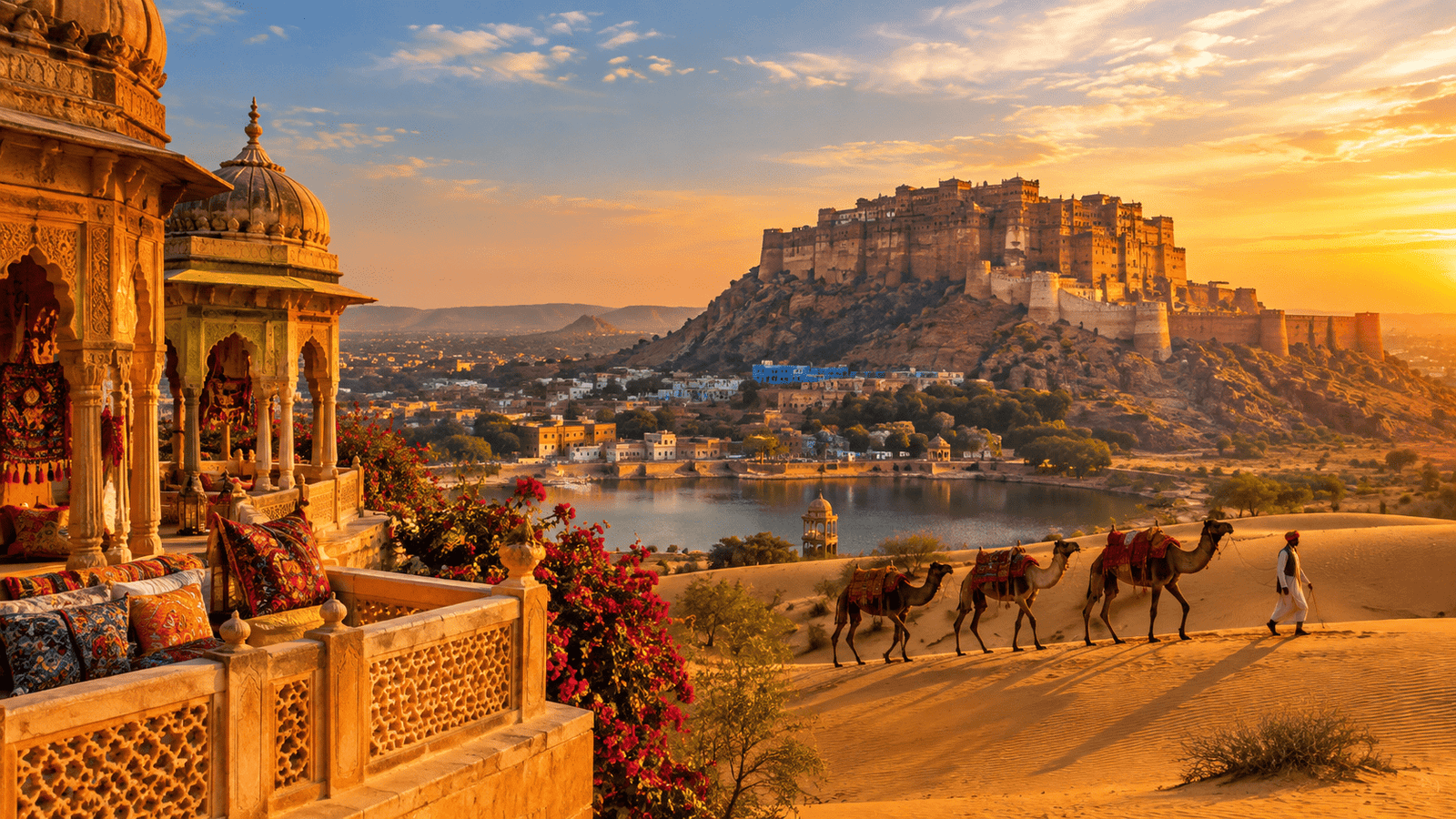
- Exploring Mehrangarh Fort in Jodhpur
- Visiting the City Palace in Udaipur
- Walking through the blue lanes of Jodhpur
- Exploring the markets of Jaipur
- Taking a desert safari near Jaisalmer
- Watching the sunset over the Thar Desert
- Visiting Ranthambore for a wildlife safari
These activities become significantly more comfortable when the weather is pleasant.
Rajasthan Tourism states that summer temperatures can reach around 48°C, while its published seasonal ranges show approximately 10°C–27°C from January to March, 24°C–45°C from April to June, 21°C–35°C from July to September, and 13°C–30°C from October to December.
For a first-time visitor who wants to cover multiple destinations, weather should therefore be one of the first factors considered when selecting travel dates.
Best Time to Visit Rajasthan for First-Time Tourists: October to March
For most first-time tourists, October to March is the most practical travel window.
The weather becomes considerably more comfortable after the summer heat, making sightseeing, road trips and desert experiences easier to enjoy.
Rajasthan Tourism identifies winter as the best season and notes that winter generally begins around October, while RTDC describes the period from October into March as the cooler travel season.
However, even within these months, there are differences.
October and November: Excellent for Comfortable Sightseeing
October is when Rajasthan begins moving away from the monsoon period and toward its cooler season.
This can be a particularly attractive period for travellers who want a combination of:
- Comfortable sightseeing
- Fewer extreme temperatures
- Desert experiences
- Road trips
- Photography
- Cultural experiences
November is also an excellent month for a classic Rajasthan itinerary.
You can comfortably combine destinations such as:
Jaipur → Pushkar → Jodhpur → Jaisalmer → Udaipur
without dealing with the intense heat associated with late spring and early summer.
For first-time visitors, October and November can also be useful if you want to experience Rajasthan before the coldest winter nights arrive.
December and January: Peak Winter Travel
December and January are among the most popular months for Rajasthan tourism.
The daytime weather can be pleasant for sightseeing, while nights—especially in desert and inland areas—can become quite cold.
Rajasthan Tourism notes that December and January can have significant day-night temperature differences, with temperatures in some locations occasionally dropping to around 0°C or below.
This is something many first-time tourists underestimate.
You may spend your afternoon comfortably walking around a fort in the sunshine and then need a warm jacket after sunset.
What makes December and January attractive?
They are particularly suitable for:
- Jaipur sightseeing
- Jodhpur sightseeing
- Udaipur sightseeing
- Jaisalmer desert camps
- Cultural tourism
- Photography
- Heritage hotels
- Road trips
- Outdoor sightseeing
Rajasthan also hosts several cultural events and festivals during the cooler months, including well-known events associated with Jaipur, Udaipur and Pushkar.
One important booking tip
Because winter is the most popular travel period, accommodation and transport can become more competitive.
If your travel dates are fixed, especially around holidays or major festivals, booking hotels and transportation in advance is sensible.
February and March: A Good Alternative for First-Time Visitors
February can be another excellent month for exploring Rajasthan.
The weather begins gradually warming compared with January, but conditions can remain comfortable for sightseeing.
March is more complicated.
Early March can still work well for a Rajasthan itinerary, but temperatures begin rising as summer approaches. If you are sensitive to heat, February is generally easier than late March.
For a first-time tourist, February can provide a useful balance between:
pleasant weather + outdoor sightseeing + cultural experiences.
Rajasthan Weather Month by Month
Here is a practical overview to help you select your travel dates.
| Month | General Conditions | Best For |
|---|---|---|
| January | Cool days, cold nights | Heritage, desert, sightseeing |
| February | Pleasant and comfortable | Complete Rajasthan tours |
| March | Increasing warmth | Short trips, early-season travel |
| April | Hot | Hill destinations, selected attractions |
| May | Very hot | Mount Abu, limited itineraries |
| June | Very hot | Mountain destinations and indoor sightseeing |
| July | Monsoon begins | Green landscapes, fewer crowds |
| August | Monsoon | Udaipur, Bundi, cultural experiences |
| September | Post-monsoon transition | Scenic travel, fewer crowds |
| October | Pleasant transition | Excellent all-round travel |
| November | Comfortable | Classic Rajasthan itinerary |
| December | Cool and popular | Desert, heritage and festivals |
Official Rajasthan tourism information broadly places April–June in the hot season, July–September in the monsoon period and October onward in the cooler season.
Is Summer a Good Time to Visit Rajasthan?
For most first-time tourists planning a traditional Rajasthan sightseeing tour, April to June is not the easiest period.
Temperatures can become extremely high, and Rajasthan Tourism reports summer temperatures reaching up to approximately 48°C in some areas.
Imagine trying to explore a large fort at 2 PM under intense sun. The architecture may be spectacular, but the heat can make the experience exhausting.
However, this doesn't mean Rajasthan should be completely avoided during summer.
The trick is to choose your destinations carefully.
Consider Mount Abu, Kumbhalgarh and Ranakpur
Rajasthan Tourism specifically recommends places such as Mount Abu, Kumbhalgarh and Ranakpur for summer travellers because conditions there can be more pleasant than in many other parts of the state.
If summer is your only available travel period, modify your itinerary rather than attempting to follow a typical winter itinerary.
Experienced traveller strategy for summer
Plan sightseeing:
Early morning → Indoor/Hotel break → Late afternoon → Evening
Avoid trying to complete a full-day outdoor sightseeing schedule during the hottest part of the day.
Is Monsoon a Good Time to Visit Rajasthan?
Yes—but monsoon Rajasthan is a completely different experience.
The monsoon generally falls between July and September. Official Rajasthan tourism information describes this period as more pleasant than summer in many areas and notes that rainfall can transform parts of the landscape.
The biggest advantage is that tourist crowds can be lower than during the peak winter season.
Monsoon is particularly interesting for:
- Udaipur
- Bundi
- Jaipur
- Keoladeo National Park
- Scenic photography
- Cultural experiences
- Travellers looking for fewer crowds
Rajasthan Tourism specifically highlights Bundi, Udaipur and Keoladeo National Park as attractive monsoon destinations.
Udaipur can be especially atmospheric during this season because its lakes and surrounding landscapes take on a different character.
Which Season Is Best for a Rajasthan Desert Safari?
If the Thar Desert is one of your main reasons for visiting Rajasthan, timing becomes even more important.
Jaisalmer and the surrounding desert region can become extremely hot during summer.
For most first-time tourists, October to March is much more suitable for desert activities.
This is when you can comfortably enjoy experiences such as:
- Camel rides
- Desert camping
- Sunset photography
- Cultural performances
- Jeep safaris
- Stargazing
- Traditional Rajasthani dinners
Rajasthan Tourism's Udaipur travel information, for example, identifies October to March as an ideal period for camping activities.
My practical recommendation
If you are visiting Jaisalmer for the first time, don't plan the desert portion of your trip around the hottest months simply because accommodation appears cheaper.
A desert experience is much more enjoyable when you can actually sit outside after sunset and appreciate the landscape.
Best Time to Visit Jaipur for First-Time Tourists
Jaipur is often the starting point of a first Rajasthan trip.
The city combines:
- Amer Fort
- City Palace
- Hawa Mahal
- Jantar Mantar
- Nahargarh Fort
- Local markets
- Traditional cuisine
- Handicrafts
Because many of these experiences involve outdoor walking, October to March is generally the most comfortable period.
Winter mornings can be cool, while sunny afternoons are often more suitable for sightseeing.
If you visit Jaipur during summer, consider starting your sightseeing early in the morning and keeping indoor attractions or rest periods around the hottest part of the day.
Best Time to Visit Jodhpur
Jodhpur, known for its blue-painted old city and magnificent Mehrangarh Fort, is another destination where comfortable weather can significantly improve the experience.
For first-time visitors, October to March is generally the practical window.
The old city is best explored at a relaxed pace rather than rushing from attraction to attraction.
Give yourself time to explore the lanes, local shops, viewpoints and food rather than treating Jodhpur as simply a checklist of monuments.
Best Time to Visit Udaipur
Udaipur is slightly different from the desert destinations.
The city's lakes, palaces and surrounding Aravalli landscapes make it appealing across multiple seasons.
October to March remains an excellent period for first-time visitors who want comfortable sightseeing.
However, monsoon can offer a distinctive visual experience because rainfall brings freshness and greenery to the landscape. Rajasthan Tourism specifically highlights Udaipur as one of the destinations that can be particularly picturesque during monsoon.
So if photography and atmosphere are more important to you than perfectly predictable weather, monsoon deserves consideration.
Best Time to Visit Ranthambore
If wildlife is an important part of your Rajasthan itinerary, don't choose your travel month based only on Jaipur and Jaisalmer.
Ranthambore follows its own wildlife considerations, so your safari plans should be checked separately before booking.
For a first-time Rajasthan trip combining wildlife with heritage destinations, winter and the cooler months are often easier to integrate into a broader itinerary.
The important lesson is:
Choose your travel dates according to the experience you care about most.
Best Time to Visit Rajasthan for Couples
For couples planning a Rajasthan holiday, October to March is generally the easiest period for combining sightseeing with romantic experiences.
A couple's itinerary could include:
Jaipur → Jodhpur → Jaisalmer → Udaipur
This allows you to experience:
- Palace architecture
- Heritage hotels
- Desert sunsets
- Lake views
- Rooftop dining
- Cultural performances
- Scenic road journeys
For a romantic trip, avoid packing too many destinations into too few days.
Rajasthan is large, and constantly moving between cities can turn a romantic holiday into a transport-heavy trip.
Best Time to Visit Rajasthan on a Budget
Winter is the most popular season, so travellers looking for lower-cost options should consider shoulder periods.
Depending on destination and demand, late September/October or parts of March can sometimes offer a different balance of availability and pricing compared with peak travel periods.
Monsoon can also be worth considering if your priority is avoiding peak tourist crowds.
But don't select dates purely because a hotel room is cheaper.
A low accommodation price is not necessarily a saving if extreme heat forces you to spend more on indoor activities, transportation or changes to your itinerary.
How Many Days Do You Need for Your First Rajasthan Trip?
For first-time tourists, I recommend thinking in terms of experience rather than simply the number of cities.
5 Days
Focus on:
Jaipur + Pushkar/Ajmer
Good for a short introduction.
7 Days
Consider:
Jaipur + Jodhpur + Udaipur
This gives you a strong combination of forts, palaces, markets and lakes.
10 Days
Consider:
Jaipur + Jodhpur + Jaisalmer + Udaipur
This is a much more comprehensive first Rajasthan experience.
12–14 Days
You can add destinations such as:
- Pushkar
- Ranthambore
- Bikaner
- Bundi
- Kumbhalgarh
- Mount Abu
The mistake I see frequently in first-time Rajasthan itineraries is trying to visit too many cities.
Rajasthan rewards slower travel.
What to Pack for Rajasthan
Your packing list should change according to the season.
For October to March
Pack:
- Light cotton clothing
- Comfortable walking shoes
- Light jacket
- Warm layers for December and January
- Sunglasses
- Sunscreen
- Personal medicines
- Reusable water bottle
For April to June
Prioritise:
- Lightweight cotton clothing
- Full-sleeve breathable clothes
- Sunglasses
- High-SPF sunscreen
- Hat/cap
- Comfortable footwear
- Hydration supplies
For July to September
Consider:
- Compact umbrella
- Quick-dry clothing
- Waterproof footwear
- Light rain jacket
- Camera protection
- Extra bags for wet clothing
Practical Tips for First-Time Rajasthan Tourists
1. Don't underestimate the size of Rajasthan
Distances between major destinations can be significant.
Always check actual travel time rather than judging distance from a map alone.
2. Start sightseeing early
Even during winter, early mornings are often excellent for photography and avoiding the busiest periods at popular attractions.
3. Keep afternoons flexible
This becomes particularly important during warmer months.
4. Carry layers during winter
Rajasthan can feel warm in the afternoon and surprisingly cold after sunset.
5. Don't plan only around festivals
Festivals can add a wonderful cultural dimension, but they can also affect hotel availability and transport demand.
6. Reserve extra time for Udaipur and Jaisalmer
Both destinations are often better when experienced slowly rather than rushed.
7. Don't forget local food
Your Rajasthan experience isn't complete without trying regional dishes such as dal baati churma, gatte ki sabzi and other traditional Rajasthani specialties.
So, What Is the Best Month to Visit Rajasthan?
If I had to simplify the decision for a first-time tourist:
Choose October or November if:
You want pleasant weather without the deepest winter chill.
Choose December or January if:
You want the classic peak-season Rajasthan experience, winter weather and cultural events.
Choose February if:
You want comfortable sightseeing while moving toward warmer conditions.
Choose March if:
You don't mind increasing temperatures and want to travel toward the end of the cooler season.
Choose July to September if:
You want fewer peak-season crowds and enjoy monsoon landscapes.
Choose April to June if:
Your schedule is fixed or you specifically want to explore cooler destinations such as Mount Abu, Kumbhalgarh or Ranakpur.
Final Verdict: Choosing the Right Time for Your Rajasthan Trip
For first-time tourists, the most straightforward choice is October to March, because this period makes it easier to combine Rajasthan's major attractions with outdoor sightseeing.
If you want the most balanced first-trip experience, October, November, February and early March are particularly worth considering.
December and January are also excellent for the classic winter experience, but you should prepare for colder nights and greater tourist demand.
If avoiding crowds matters more to you, monsoon can provide a completely different Rajasthan experience, particularly around destinations such as Udaipur and Bundi. Official tourism information also highlights the monsoon period as a time when temperatures become more pleasant and certain landscapes become greener.
Ultimately, the best time to visit Rajasthan for first-time tourists isn't simply about finding the coolest weather. It is about matching the season with your itinerary.
If your dream Rajasthan holiday includes forts, palaces, desert camps, markets, photography and long outdoor sightseeing days, choose the cooler months.
If you prefer greener landscapes, fewer crowds and a more atmospheric trip, consider monsoon.
And if summer is your only option, redesign your itinerary around the heat rather than trying to follow a winter schedule.
That small planning decision can make the difference between simply seeing Rajasthan and genuinely enjoying it.
Frequently Asked Questions
1. What is the best time to visit Rajasthan for first-time tourists?
The most practical period is generally October to March, when temperatures are more suitable for sightseeing and outdoor activities. Rajasthan Tourism identifies winter as the most favourable season.
2. Which month is best for a Rajasthan trip?
October, November, February and early March can be particularly convenient for first-time visitors because they offer a useful combination of sightseeing-friendly weather and seasonal variety.
3. Is December a good time to visit Rajasthan?
Yes. December is part of Rajasthan's cooler travel season and is suitable for sightseeing, desert experiences and cultural travel. However, nights can become cold, so warm layers are advisable.
4. Is January too cold for Rajasthan?
January can be cold, especially during mornings and nights. However, daytime conditions can be comfortable for sightseeing. Rajasthan Tourism notes that temperatures can vary significantly between day and night during December and January.
5. Can I visit Rajasthan during summer?
Yes, but April to June can be extremely hot. Rajasthan Tourism reports summer temperatures reaching up to approximately 48°C. If travelling during summer, consider destinations such as Mount Abu, Kumbhalgarh and Ranakpur and plan outdoor activities around cooler parts of the day.
6. Is Rajasthan good during the monsoon?
Yes. July to September can offer a different and potentially quieter experience. Udaipur, Bundi and Keoladeo National Park are among the destinations highlighted by Rajasthan Tourism for the monsoon period.
7. What is the best time to visit Jaisalmer?
For most first-time tourists, the cooler months from roughly October to March are more comfortable for desert activities such as camel rides, camping and sunset experiences.
8. What is the best time to visit Udaipur?
October to March is a convenient period for comfortable sightseeing. However, monsoon can make Udaipur particularly atmospheric because of the surrounding greenery and rain-fed landscape.
9. How many days are enough for Rajasthan?
A 7-day trip can cover several major destinations, while 10–14 days allows you to explore Rajasthan at a more relaxed pace. For first-time travellers, avoiding an overly packed itinerary is usually more comfortable.
10. What should I pack for a Rajasthan trip in winter?
Pack comfortable walking shoes, cotton clothes, sunglasses and sunscreen, along with a warm jacket or layers for mornings and evenings. December and January can have significant temperature differences between day and night.