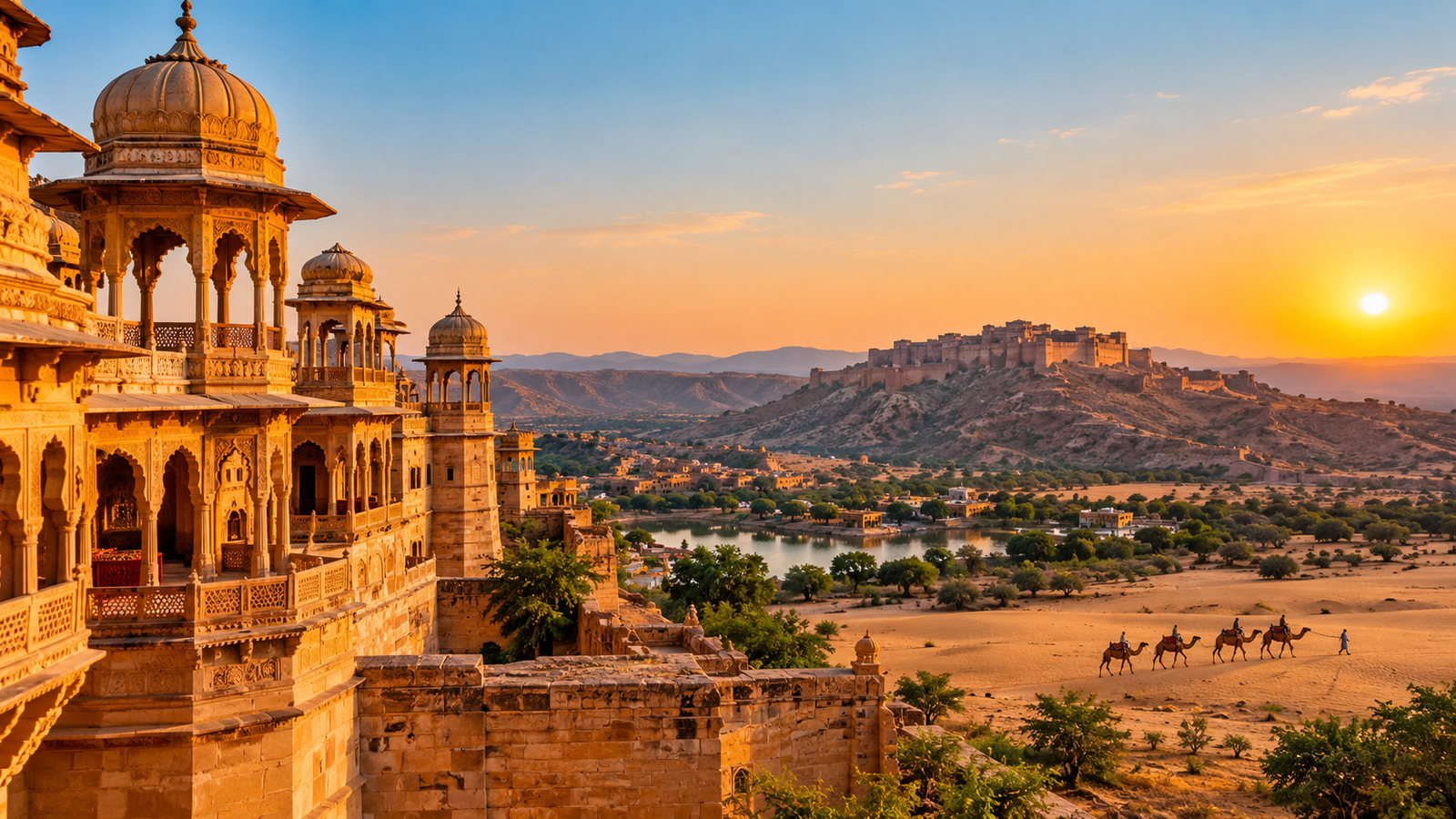
Rajasthan is one of India's most fascinating travel destinations, famous for its magnificent forts, royal palaces, colourful markets, traditional villages, beautiful lakes and golden desert landscapes. From exploring Jaipur's historic architecture to enjoying a sunset camel safari in Jaisalmer, the state offers a memorable combination of history, culture, food and adventure.
However, choosing the right travel dates can make a significant difference to your experience. Walking through a massive hilltop fort under the winter sun is very different from exploring the same monument during Rajasthan's intense summer heat. Similarly, visiting Udaipur after the monsoon can offer a very different atmosphere from travelling to the Thar Desert during the cooler winter months.
So, what is the best time to visit Rajasthan?
For most travellers, October to March is the most comfortable period, with November to February particularly suitable for sightseeing, heritage tours, desert experiences and cultural exploration. Summer can be challenging in many cities, while the monsoon season offers greener landscapes and a quieter atmosphere in several destinations. The Rajasthan Tourism Department also recommends considering the season and your planned activities when choosing travel dates.
The ideal time ultimately depends on what you want from your trip: pleasant weather, a desert adventure, a romantic holiday, wildlife experiences, cultural festivals or a more budget-conscious journey.
In this guide, we will explore Rajasthan's weather month by month, the best season for different destinations, the festivals worth planning around, and practical travel advice to help you organise a smoother and more enjoyable holiday..
Quick Answer: When Is the Best Time to Visit Rajasthan?
For a first-time visitor who wants to explore the main attractions comfortably, October to March is the best overall travel window.
These are broad seasonal patterns, not guarantees for every city or year. Conditions differ across the state, and desert destinations can experience much colder nights than travellers expect. Official state tourism guidance identifies summer as particularly hot, describes July to September as the monsoon period, and recommends the cooler post-monsoon and winter months for general sightseeing.
My practical planning recommendation: For your first Rajasthan holiday, prioritise November, December or February. These months generally provide a useful balance of sightseeing conditions, desert experiences and access to the state's major cultural attractions. Book accommodation and transport early if you are travelling around Christmas, New Year or a major festival.
Understanding Rajasthan's Climate Before You Travel
Rajasthan is India's largest state by area, and its climate is not identical everywhere. The western region around Jaisalmer and Barmer is predominantly arid, while parts of eastern and southeastern Rajasthan receive more rainfall. The Aravalli range also contributes to regional differences in landscape and weather.
This matters when planning a multi-city holiday. You might enjoy clear, sunny weather in Jaipur but encounter a chilly evening in Jaisalmer or a rainy afternoon in Udaipur.
Here is what to expect from each major season.
1. Winter in Rajasthan: October to March
Winter and the cooler post-monsoon months are generally considered the best time to visit Rajasthan. The days are often suitable for exploring forts, palaces, temples, markets and outdoor attractions without the exhausting heat associated with summer.
This season is particularly attractive for travellers who want to cover several cities in one trip. You can spend the morning exploring Amber Fort in Jaipur, walk through historic streets in the afternoon and enjoy an outdoor cultural performance in the evening.
Why winter is ideal for Rajasthan travel:
Comfortable conditions for extended sightseeing on many days.
Better opportunities for desert excursions and sunset photography.
A lively atmosphere around cultural festivals and seasonal events.
Suitable weather for family holidays, couples' trips and heritage tours.
Good conditions for combining cities, rural attractions and selected wildlife destinations.
However, winter is not uniformly warm. December and January nights can become very cold, particularly in desert locations. Rajasthan's tourism authorities note that temperatures can fall to around 0°C or below in some areas during this period.
Expert planning tip: Do not pack only light cotton clothes because Rajasthan is a warm-weather destination. Carry a jacket, a warm layer and comfortable walking shoes. Early mornings in the desert may feel very different from sunny afternoons in Jaipur.
Best winter destinations: Jaipur, Udaipur, Jodhpur, Jaisalmer, Pushkar, Bikaner and selected wildlife destinations.
2. Summer in Rajasthan: April to June
Summer is generally the most challenging season for conventional sightseeing. Temperatures can rise towards 45–48°C in some locations, and the heat is particularly intense in parts of the western desert region.
The main issue is not simply the temperature. Many popular attractions involve climbing steps, walking across exposed courtyards or standing in open areas with little shade. Travelling between destinations during the hottest part of the day can also become tiring.
However, summer does not mean Rajasthan is completely unsuitable for travel. It can work well when the itinerary is designed around the weather.
How to plan a summer trip:
Visit outdoor attractions early in the morning.
Schedule indoor museums, galleries and hotel breaks during the hottest hours.
Choose air-conditioned transport for longer journeys.
Stay hydrated and carry sun protection.
Consider relatively elevated destinations such as Mount Abu, Kumbhalgarh and Ranakpur, which are recommended summer alternatives in state tourism guidance.
For travellers who want a relaxed holiday rather than a packed sightseeing schedule, a hill retreat or a carefully planned palace-hotel stay can make summer more manageable.
Best suited for: Travellers seeking selected hill destinations, flexible hotel-based holidays or potentially quieter attractions who can tolerate high temperatures.
My advice: Avoid building a summer itinerary around long midday walks in Jaisalmer, Jodhpur or Jaipur. Saving money on travel dates is not always worthwhile if the heat prevents you from enjoying the attractions you came to see.
3. Monsoon in Rajasthan: July to September
The monsoon transforms parts of Rajasthan into a greener and more atmospheric landscape. Rainfall can refresh hills, gardens and lakeside surroundings, especially in eastern and southeastern areas.
Udaipur can be particularly appealing during this period, when its lake scenery and surrounding hills may appear greener. Bundi and selected countryside destinations are also worth considering. Rajasthan's official tourism guidance specifically highlights Udaipur, Bundi and Keoladeo National Park among places to consider during the monsoon.
The monsoon also brings cultural events, including the Teej celebrations associated with Jaipur. Festival dates depend on the calendar, so check the schedule for your intended travel year.
Why choose monsoon travel?
Landscapes can appear greener and more photogenic.
Lakeside scenery may be especially attractive after rainfall.
Some attractions may be quieter than during the winter peak.
The weather can be more comfortable than peak summer in certain locations.
Rainy-day conditions can add a different atmosphere to a heritage holiday.
There are trade-offs. Heavy showers can disrupt road journeys, outdoor photography and sightseeing schedules. Water levels, access conditions and the opening of individual attractions may vary.
Best suited for: Couples, photographers, repeat visitors and travellers who prefer landscapes, heritage towns and a slower pace.
Expert planning tip: Keep your itinerary flexible. Avoid placing every outdoor activity on a fixed timetable, and check local weather and road conditions before travelling between destinations.
Best Time to Visit Rajasthan Month by Month
The best month depends on your priorities, but understanding the progression of the seasons makes choosing dates much easier.
January: Excellent for Heritage and Desert Travel
January is one of the strongest choices for a classic Rajasthan itinerary. The weather is often suitable for exploring historic sites, wandering through markets and spending time outdoors.
Jaipur's forts, Jodhpur's blue-painted neighbourhoods and Udaipur's lakeside attractions can all fit comfortably into a well-planned schedule.
January can also be a good time for desert experiences in Jaisalmer. However, evenings and overnight desert camps can be very cold, so warm clothing is essential.
Best for: First-time visitors, families, couples and heritage enthusiasts.
February: One of the Best Months for a Rajasthan Holiday
February is another excellent month for exploring Rajasthan. Daytime conditions are often pleasant, making it easier to combine major attractions with local markets, cultural activities and regional cuisine.
For a multi-city trip, February offers a particularly useful balance. You can explore Jaipur's royal architecture, visit Jodhpur's fort, enjoy Udaipur's lakes and finish with a desert excursion in Jaisalmer.
Late February can become warmer, depending on the year, so travellers planning towards the end of the month should check the forecast.
Best for: Photography, family trips, romantic holidays and multi-city itineraries.
March: Good Early in the Month
March can be a good option for travellers who want to avoid some of the winter peak. Early March often remains suitable for sightseeing, although temperatures tend to rise as the month progresses.
Holi may also fall in March, depending on the year. The festival can provide a memorable cultural experience, but you should confirm local celebrations and plan transport and accommodation around the dates.
Best for: Short heritage trips, festival travel and travellers with flexible schedules.
April: Better for Select Destinations
April marks the beginning of the hotter travel period. Long outdoor sightseeing sessions become less comfortable, especially in western Rajasthan.
A short visit focused on indoor attractions, relaxed accommodation and early-morning outings is more sensible than attempting to cover the entire state.
Best for: Travellers prioritising selected destinations and those who can adapt their daily schedule to the heat.
May: Choose Your Destinations Carefully
May is among the hottest months in many parts of Rajasthan. Travellers considering a holiday at this time should pay particular attention to heat, hydration and the amount of time spent outdoors.
A stay around Mount Abu or a relaxed holiday with limited sightseeing may be more practical than a fast-paced desert circuit.
Best for: Carefully planned retreats rather than intensive sightseeing.
June: Hot Weather Before the Monsoon
June generally remains very hot, particularly during the early part of the month. Monsoon onset and rainfall timing vary from year to year, so it is unwise to book a trip on the assumption that refreshing rain will arrive by a specific date.
If travelling in June, plan indoor breaks, flexible outdoor activities and comfortable transport.
Best for: Travellers who can accommodate high temperatures and changing weather.
July: Monsoon Landscapes Begin to Attract Attention
July can bring a welcome change to parts of Rajasthan as rainfall develops. Lakes, hills and gardens may become more attractive, although the amount of rain differs considerably across the state.
Udaipur and Bundi are worth considering, provided you remain flexible about outdoor activities.
Best for: Scenic holidays and travellers who appreciate monsoon landscapes.
August: A Good Option for a Slower Holiday
August can be appealing for people who prefer green scenery, relaxed itineraries and cultural experiences over a packed sightseeing schedule.
Rain can enhance the atmosphere around lakes and historic towns, but sudden showers may affect travel arrangements.
Best for: Couples, photographers and relaxed heritage holidays.
September: A Transition Towards the Peak Season
September is a transition month. As the monsoon retreats, some areas begin to become more comfortable for sightseeing, while others may still receive rain.
This can be a useful month for travellers who want to explore at a slower pace before the busier winter season, subject to local weather conditions.
Best for: Flexible travellers, repeat visitors and those interested in changing landscapes.
October: The Start of the Popular Travel Window
October is an appealing month to begin planning a Rajasthan holiday. Temperatures generally begin easing compared with peak summer, and the state starts moving towards its main sightseeing season.
Festival dates vary, and early October can still be warm in some locations. Travellers should not assume that winter conditions arrive everywhere at the same time.
The Pushkar Fair, held during October or November depending on the calendar, is a major cultural attraction. Confirm the official dates before making reservations.
Best for: Heritage sightseeing, cultural experiences and trips built around seasonal events.
November: One of the Best Months Overall
November is an excellent choice for many travellers. The cooler weather makes outdoor exploration more manageable, and it is a particularly attractive time to combine Rajasthan's major cities with desert experiences.
It is also a popular month, so accommodation and transport can book up quickly around festivals and holiday periods.
Best for: First-time visitors, photographers, families and desert adventures.
December: Ideal for Classic Rajasthan Experiences
December is a popular time for heritage tours, palace stays, cultural activities and desert excursions.
The main consideration is temperature variation. Sunny afternoons may feel pleasant, while evenings and early mornings can be chilly. Popular dates around Christmas and New Year may also be busier and more expensive.
Best for: Winter holidays, romantic trips, family vacations and cultural tourism.
Best Time to Visit Rajasthan's Most Popular Destinations
Choosing the right season for each destination can improve your overall trip. Rather than assuming the entire state has identical weather, plan around the activities and landscapes that matter most to you.
Jaipur: October to March
Jaipur is best explored during the cooler months, when walking tours, fort visits and market exploration are generally more comfortable.
Spend time at Amber Fort, City Palace, Hawa Mahal and the historic bazaars. Start outdoor sightseeing early, particularly when visiting hilltop and hill-facing attractions.
Udaipur: October to March, with Monsoon Appeal
Udaipur's lakes, palaces and surrounding hills make it attractive throughout much of the year. October to March is ideal for conventional sightseeing, while the monsoon can create beautiful scenery around the lakes and hills.
If you travel during the rainy months, allow flexibility for boat rides and outdoor activities, as conditions can change.
Jaisalmer: November to February
Jaisalmer is especially appealing during the cooler months, when desert excursions and sunset visits are more manageable.
Explore Jaisalmer Fort, its historic havelis and the surrounding desert. Plan camel safaris or dune visits for late afternoon rather than the hottest hours of the day.
Even in winter, carry warm clothing for evenings and overnight desert stays.
Jodhpur: October to March
Jodhpur's Mehrangarh Fort, blue-painted streets and traditional markets are best explored in cooler weather.
Allocate enough time for walking because the city has uneven streets, steps and exposed viewpoints. During the warmer months, early-morning sightseeing is preferable.
Pushkar: October to November for Festival Travel
Pushkar is particularly popular during the Pushkar Fair, a major livestock and cultural event held in October or November according to the annual calendar.
Visiting during the fair provides a different experience from an ordinary trip: the town becomes busier, and cultural events draw additional visitors. Book accommodation early and verify the festival schedule before travelling.
Mount Abu: A Potential Summer Alternative
Mount Abu provides a cooler hill-station alternative to the hotter plains and desert areas. It can be considered during summer, although it is also worth visiting in other seasons depending on your interests and the weather.
Plan for the journey from your previous destination and allow time for viewpoints, temples and the surrounding landscape.
Best Time to Visit Rajasthan for Different Travel Experiences
The ideal travel period also depends on what you want to do.
These are planning recommendations, not guarantees of specific weather or event availability. Always check your destination's forecast and verify opening times, festival dates and activity schedules before departure.
How Many Days Do You Need to Explore Rajasthan?
A good itinerary should allow enough time to enjoy each destination without spending the entire holiday in transit.
Three to Four Days
Choose one destination or a compact itinerary. Jaipur works particularly well for a shorter heritage-focused break. Trying to include five or six cities in this time can leave you with little opportunity to explore them properly.
Five to Seven Days
A week allows you to combine two or three major destinations, depending on travel connections and your interests.
For example, you could explore Jaipur and Jodhpur or design a trip focused on Jaipur and Udaipur. The right combination depends on your arrival point and transport options.
Eight to Ten Days
This is a useful duration for a first-time Rajasthan circuit.
You may be able to combine Jaipur, Jodhpur, Udaipur and Jaisalmer, but check journey times carefully. Rajasthan is a large state, and long drives can consume a substantial part of your holiday.
Ten to Fourteen Days
With two weeks, you have more flexibility to include additional destinations such as Pushkar, Bikaner, Bundi or a wildlife experience.
The advantage of a longer itinerary is that you can experience regional differences rather than treating Rajasthan as a sequence of photo stops.
Practical tip: Plan your route geographically and check actual driving times before confirming hotels. A slightly shorter route with more time at each destination is often more enjoyable than trying to see everything in one trip.
What Should You Pack for Rajasthan?
Your packing list should reflect both the season and the places you plan to visit.
For winter travel:
Comfortable daytime clothing.
A warm jacket or sweater for evenings.
Closed, comfortable walking shoes.
A scarf or light layer for chilly mornings.
Sunscreen and sunglasses.
For summer travel:
Lightweight, breathable clothing.
Sun protection, including a hat and sunglasses.
Water bottles and reliable hydration arrangements.
Comfortable shoes and clothing that cover the skin during prolonged sun exposure.
Any essential personal medication.
For monsoon travel:
A compact umbrella or rain jacket.
Footwear with a good grip.
A waterproof cover for electronic devices.
Flexible plans for outdoor attractions.
Spare clothing for wet conditions.
When visiting temples and religious sites, dress respectfully and follow local rules. Carrying a small day bag for water, identification and essentials can also make sightseeing easier.
Common Mistakes to Avoid When Planning a Rajasthan Trip
Even during the best season, poor planning can affect the experience.
1. Assuming every city has the same weather.
Desert areas, lakeside cities and elevated destinations can feel different. Check conditions for each stop rather than relying on one statewide forecast.
2. Underestimating winter nights.
Daytime sunshine does not guarantee warm evenings, especially around desert camps.
3. Scheduling every activity at midday.
Outdoor monuments are often best explored earlier in the day, with indoor attractions or rest periods scheduled around the warmest hours.
4. Booking festival travel too late.
Popular event periods can increase demand for accommodation and transport. Confirm dates and reserve early once your itinerary is settled.
5. Trying to cover too many cities.
Long driving days reduce the time available for local culture, markets, meals and spontaneous discoveries.
6. Treating monsoon travel as completely predictable.
Rainfall varies across Rajasthan and from year to year. Leave room for changes to outdoor plans.
7. Forgetting to check attraction schedules.
Fort visits, wildlife safaris, boat rides and cultural performances may follow different seasonal schedules. Verify the details directly before finalising your itinerary.
Final Verdict: What Is the Best Time to Visit Rajasthan?
The best time to visit Rajasthan is generally October to March, with November, December, January and February being especially attractive for travellers interested in forts, palaces, desert safaris and multi-city sightseeing.
Choose October or early November for the transition into the main travel season and potential cultural events. Travel in December or January for a classic winter holiday, while February is an excellent option for a broad Rajasthan itinerary. March can also work well, particularly early in the month.
Summer is better approached selectively, while the monsoon can offer rewarding scenery in places such as Udaipur and Bundi.
The most important planning principle is to match your dates to your destinations. Consider the weather, the activities you want to experience, your available time and your budget before choosing your route. With the right planning, Rajasthan offers much more than famous monuments: it becomes a journey through regional traditions, beautiful landscapes, local food and the living heritage of India's royal state.
Frequently Asked Questions (FAQs)
1. What is the best time to visit Rajasthan?
October to March is generally the best time to visit Rajasthan. November to February is particularly suitable for sightseeing, desert excursions, heritage walks and exploring popular cities such as Jaipur, Jodhpur, Udaipur and Jaisalmer.
2. Which month is best for visiting Rajasthan?
February is an excellent all-round choice because it often offers pleasant daytime conditions for sightseeing and multi-city trips. November, December and January are also popular, although winter nights can be cold and peak travel dates may be busy.
3. Is Rajasthan worth visiting in summer?
Yes, Rajasthan can still be worth visiting in summer, but destinations and activities need careful planning. April to June can be extremely hot, with temperatures approaching 45–48°C in some locations. Consider Mount Abu or selected elevated destinations, and schedule outdoor activities early in the morning.
4. Is the monsoon a good time to visit Rajasthan?
Yes, especially for travellers who enjoy green landscapes, lakes and quieter sightseeing. Udaipur and Bundi are worth considering between July and September. However, rainfall varies, and showers may affect road journeys and outdoor activities.
5. What is the best time to visit Jaisalmer?
November to February is generally the best period for visiting Jaisalmer. Cooler conditions make exploring the fort, walking through historic neighbourhoods and visiting the Thar Desert more comfortable. Pack warm clothing for evenings and overnight desert camps.
6. What is the best time to visit Jaipur?
October to March is generally the best period to visit Jaipur. The weather is more suitable for exploring Amber Fort, City Palace, Hawa Mahal and the city's markets than during peak summer.
7. When is the Pushkar Camel Fair held?
The Pushkar Fair is traditionally held during October or November, but the dates change according to the annual calendar. Check Rajasthan Tourism's official festival information for the relevant year before booking travel.
8. How many days are enough for a Rajasthan trip?
Five to seven days can cover two or three destinations at a comfortable pace. Eight to ten days provides more flexibility for a classic multi-city itinerary, while ten to fourteen days can accommodate additional heritage towns, desert experiences or wildlife activities.
9. Is December too cold for a Rajasthan holiday?
No. December is a popular month for Rajasthan travel because daytime conditions are often suitable for sightseeing. However, early mornings and nights can be very cold in some areas, particularly in the desert. Warm layers are recommended.
10. Which season is best for a family trip to Rajasthan?
November to February is generally ideal for families because the weather often makes sightseeing more comfortable. Choose an itinerary with reasonable driving times, suitable accommodation and breaks between outdoor attractions.
11. When is Rajasthan less crowded?
Some travellers prefer the monsoon months or the shoulder periods around the main winter season for a quieter experience. However, crowds vary by destination, school holidays, weekends and festivals. Summer can also be quieter in some places, but the heat is a significant trade-off.
12. What is the best time to visit Rajasthan for photography?
October to March is an excellent period for heritage and desert photography. Winter offers opportunities for golden-hour desert landscapes and architectural photography, while the monsoon may produce greener scenery around Udaipur and other wetter regions.